Ethical Leadership
Quick Summary: It’s hard these days to find companies, especially software ones, that are both ethical and scalable. Leadership is the most important factor in my decision to stay or leave a company, and everyone should consider ethical leadership as a priority in their own decisions as well.
One of the reasons I joined my company is that it seemed like an ethical place to work. Not only is it in the healthcare industry, but it promotes Value-Based Care (VBC), a model that includes financial incentives to improve the health of patients (finally) and replaces the extremely ineffective Fee-for-Service (FFS) model which is undoubtedly a big component of how our healthcare system got so inefficient and expensive.
But that was not the only reason I joined; I also joined because the leaders themselves seemed like ethical people. They cared not only about the financial success of the company, but also the actual impact they were making, and the importance of people (employees) in the equation. Soon after I started I gained respect especially for the CEO, who successfully managed to balance ethical decision making with smart business practices in a very harmonious way. This ideology was the foundation of the company, and ultimately was codified into a charter as a B Corp.
The Tech Department
I respected my hiring manager and team a lot when I started. It was full of smart and, better yet, nice people, who cared about society and principles. The senior leadership within the tech department was a bit opaque to me, I didn’t have opportunities to interact with them, nor were they very communicative. In short, I just didn’t really have an opinion of them, they weren’t important to my immediate goals.
A more prescient past version of myself would have recognized this as a warning sign, that things were not running so well at the upper management levels, and that the company was on the verge of scaling massively without having the proper foresight to do it well. But before realizing this a series of events would occur that would start to shape the department into a scaling-ready entity. The business was about to expand, and pretty much all of senior leadership was about to be replaced with the all-wise, scaling experts from Big Tech.
Uh oh… I can feel it, you might say, here comes a rant that sails on the tides of big-tech prejudice to bring you lessons about capitalism and the state of society.
Yep that’s about right. But I’ll try to be brief.
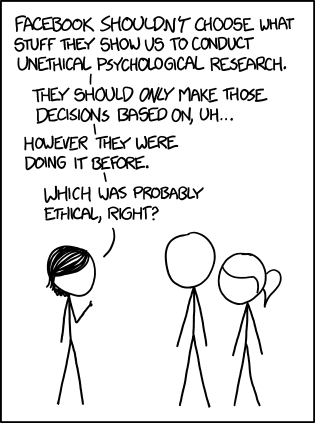
Big Ethical
If your hiring process has any of these evolutions, it’s not a good sign:
- poaching/funneling from big tech, and catering the compensation requirements to “lure in the best talent”
- increasing interview count for senior roles to weed out mid-tier talent
- decreasing opportunities for “soft”-skills / qualitative assessment in interviews (i.e. fewer questions that get at “what are you like outside of work?”, and “would you fit in with our culture?”)
- posting no junior roles
The best way I can sum these processes up is this: your leadership does not have trust in its technical team. As a disclaimer, I’ve never worked in big tech, and I don’t want to come across as saying all big tech company cultures are bad, or that there aren’t good people that work for big tech. It’s the mentality of leadership behind these processes that is the real problem.
If the focus of technical leadership at a given point in time is to maximize scaling potential of an organization, it is insufficient and even disadvantageous to take the “big tech” mindset. The best organizations are the ones that remain true to their core, and develop a culture of people that aligns self-interest with a greater ethical contribution to society. A lot of people (my past self included) develop a notion that it is superior to your career to get hired at a big tech company, e.g. the sought-after FAANG (or whatever it is now) opportunities. But this is a great deception and sadness with our most talented individuals today, they falsely attribute technical scale and notoriety as the full picture of a great place to work.
The real challenge is how to make a positive and lasting impact on society. There isn’t a FAANG equivalent for this (maybe there should be!); because we are so focused on compensation and the very American “growth at all costs” mindset, we forget the purpose of work in the first place: to contribute effort to making society better, to promote the survival of humanity and its values. The ethical company should be the gold standard.
It’s unfortunate the incentives of capitalism often do not align with the incentives of societal growth and prosperity. Maybe some day they will, in a similar manner to how VBC is changing healthcare (albeit, slowly). But in the meantime, at the end of your life, would you rather have spare money/assets laying around, or made an impact that you could be proud of? Are the extravagant experiences you imagine paying for going to be worth knowing that society isn’t better off for it?
The right way to scale a company is to foster a culture of ethical decision makers to begin with. Scaling a company is not something that can be automated, it’s not something you can simply throw resources at. It requires good people and mutual respect, because otherwise what really is the point of your company?
Conclusion
Anyway, I left that company. It was hard to explain all this, especially during the several conversations I had with leadership after I gave notice. (What a range of responses I got though. From empathetic understanding up to complete denial and gaslighting.) And it was an especially hard decision given what I know about the broader company’s mission and ethical foundations.
But my search goes on. When I find an ethical business that maintains consistency within its internal processes, that can face a challenge like scaling with integrity and determination, that’s when I know I’ve found a company that is honest with itself, and one to which I can be motivated to contribute.
PS
Everything you do is a balancing act of sorts, so I do not mean to give the impression that you should only consider your company’s ethical background when applying for jobs. Society also doesn’t benefit if you don’t live with relative comfort, that’s why it’s important that incentives get aligned between self-interest AND society-ethics (don’t get me started about Ayn Rand, she’s on the other side of the spectrum).
But if you are making enough for your general satisfaction (being honest with yourself on what that means), your career goal shouldn’t be “making more money”, it should be “doing more good”.